


Best Practice | 3 min read
Best Practice | 3 min read
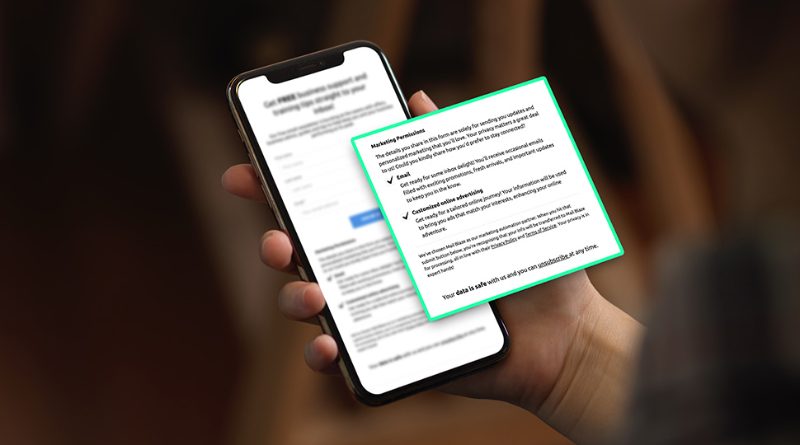
There is a number that a lot of email marketers quietly chase without admitting it. The size of their list.
It makes sense as an instinct. More subscribers means more potential reach. But it also assumes that every subscriber is equal, and they are not.
A subscriber who chose to join your list, knew exactly what they were signing up for, and has been opening your emails ever since is worth more than a hundred addresses added through a purchased list, a vague lead magnet, or a pre-checked opt-in box they never noticed. The gap is not small. It is the difference between a list that builds something over time and one that slowly degrades your sending reputation.
What genuine permission actually means
Permission in email marketing is often treated as a compliance checkbox. Did they tick the box? Fine, add them.
But genuine permission is something different. It means the subscriber understood what they were signing up for, actively chose to receive it, and has a reasonable expectation that what arrives will match what was promised. That third point is the one most often skipped.
You can have technical consent and still be sending email that feels like an imposition. The subscriber clicked something once, received something unexpected, and has been politely ignoring you ever since. That is not permission. That is inertia.
Why list size is the wrong metric to optimise
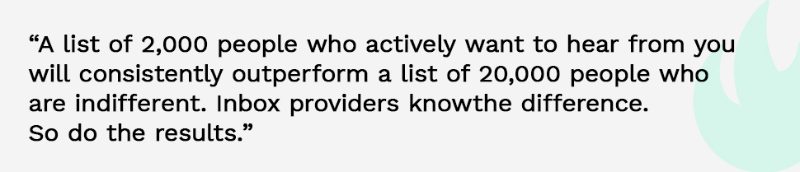
List size is a vanity metric when it is not accompanied by engagement data. What actually matters is the proportion of your list that is actively engaged: opening, clicking, replying, buying.
When that proportion is high, your deliverability improves because inbox providers see consistent positive signals. Your data improves because your metrics reflect your actual audience. Your content improves because you learn what resonates with people who genuinely want to hear from you.
When that proportion is low, the reverse happens. A large list with low engagement is not just a neutral asset. It is actively working against you.
How to build a list on genuine permission
Genuine permission starts before the sign-up. It starts with the offer.
- Be specific about what subscribers will receive. "Monthly marketing tips" is vague. "A weekly email with one practical idea for improving your email engagement" is a promise.
- Match the frequency and content to the expectation you set. If you said monthly and you send weekly, that is a permission problem even if the content is good.
- Use your sign-up page as the first moment of the relationship, not a form to be completed. What are you giving them a reason to want?
- Avoid pre-checked boxes, bundled consent, or anything that assumes agreement rather than inviting it.
- Segment from the start. Someone who signed up for a specific lead magnet may not want your full newsletter. Build the journey that earns the broader relationship.
Consent and compliance: the floor, not the ceiling
GDPR, POPIA, CAN-SPAM and equivalent regulations set a legal floor for consent. Meeting that floor is not the same as having a healthy permission foundation.
The regulations tell you the minimum. Genuine permission is the practice of going beyond it: being clear, being honest about what you are asking, and building a list of people who are genuinely glad to be on it.
That approach takes longer. It produces smaller numbers in the early stages. And it compounds into a list that performs, retains, and grows through referral rather than through acquisition alone.
What to do if your list has a permission problem
If you have a large list with declining engagement, the permission foundation is worth examining before you spend more on acquisition or content.
A re-engagement campaign to inactive subscribers is a reasonable first step. It gives people who have gone quiet a clear chance to stay or leave. The ones who re-engage are worth keeping. The ones who do not should be removed.
It will feel counterintuitive to shrink your list. But a smaller list of engaged subscribers is a better asset than a large list that is quietly dragging everything down.
Explore further about Content Marketing article here.

Maximising email engagement: Strategies and tactics
Every marketer knows that sending emails is still a great way to reach people. But without the right tricks under your belt, it can be more difficult to engage your subscribers than it needs to be....
Fuelling Success with Springnest
We chat to Springnest, an online platform helping tourism and hospitality properties build and maintain their websites. Springnest clients can now enjoy the ease of the latest Mail Blaze integratio...

Celebrating the phenomenal women of Mail Blaze!
This August, as South Africa celebrates Women’s Month, Mail Blaze takes the opportunity to honour the incredible women who play pivotal roles within the company.
Explore further about Content Marketing article here.
Maximising email engagement: Strategies and tactics
Every marketer knows that sending emails is still a great way to reach people. But without the right tricks under your belt, it can be more difficult to engage your subscribers than it needs to be....
Fuelling Success with Springnest
We chat to Springnest, an online platform helping tourism and hospitality properties build and maintain their websites. Springnest clients can now enjoy the ease of the latest Mail Blaze integratio...
Celebrating the phenomenal women of Mail Blaze!
This August, as South Africa celebrates Women’s Month, Mail Blaze takes the opportunity to honour the incredible women who play pivotal roles within the company.
Maximising email engagement: Strategies and tactics
Every marketer knows that sending emails is still a great way to reach people. But without the right tricks under your belt, it can be more difficult to engage your subscribers than it needs to be....
Maximising email engagement: Strategies and tactics
Every marketer knows that sending emails is still a great way to reach people. But without the right tricks under your belt, it can be more difficult to engage your subscribers than it needs to be....
Fuelling Success with Springnest
We chat to Springnest, an online platform helping tourism and hospitality properties build and maintain their websites. Springnest clients can now enjoy the ease of the latest Mail Blaze integratio...
Celebrating the phenomenal women of Mail Blaze!
This August, as South Africa celebrates Women’s Month, Mail Blaze takes the opportunity to honour the incredible women who play pivotal roles within the company.
Still haven't found what you are looking for?
Book a demo with us and see Mail Blaze in action, or reach out to our support team for expert assistance. We're here to help you every step of the way!
Still haven't found what you are looking for?
Still haven't found what you are looking for?
Book a demo with us and see Mail Blaze in action, or reach out to our support team for expert assistance. We're here to help you every step of the way!
Book a demo with us and see Mail Blaze in action, or reach out to our support team for expert assistance. We're here to help you every step of the way!
2025 © Mail Blaze. All rights reserved.